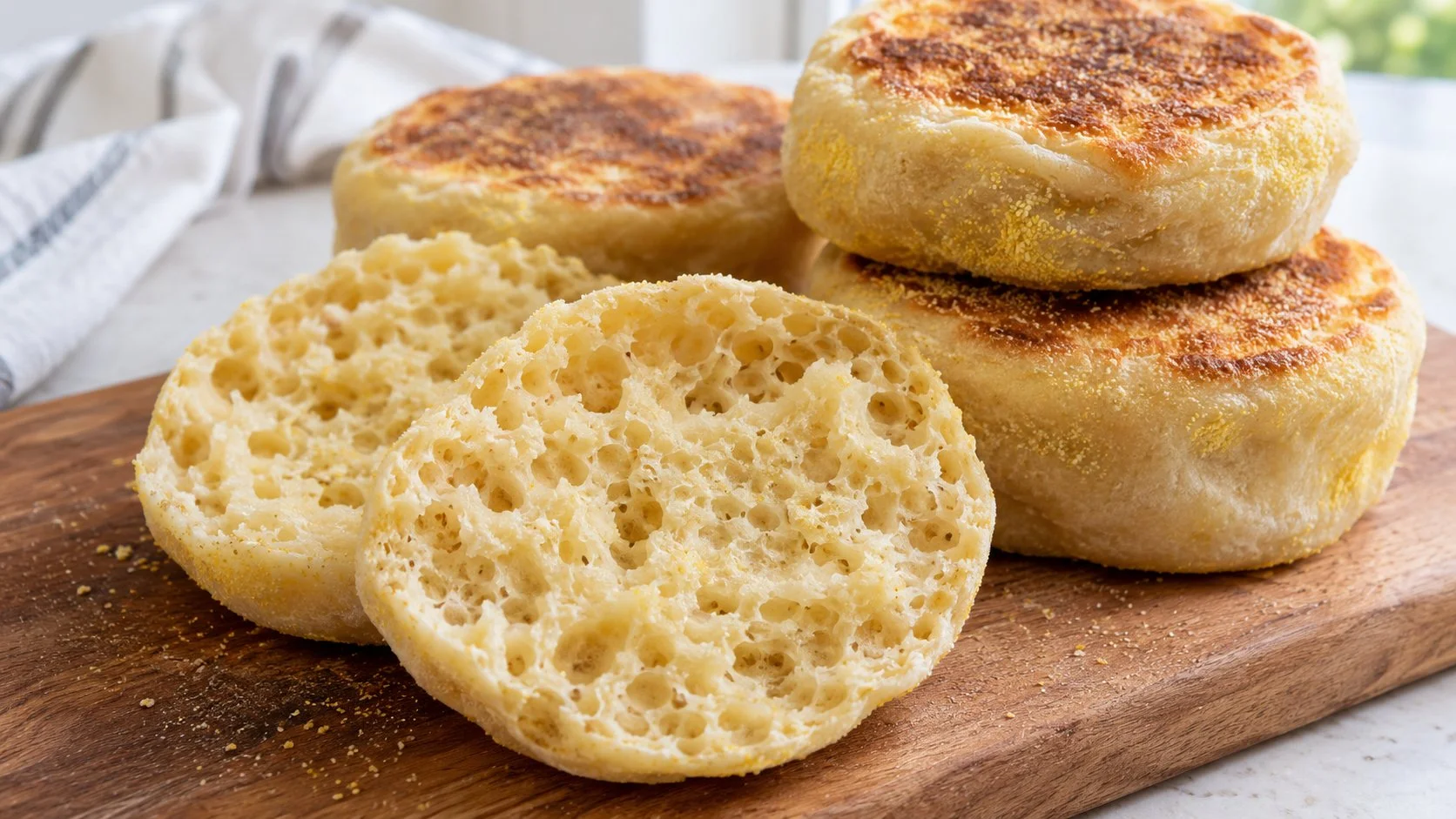
Homemade sourdough English muffins are a delightful treat known for their unique texture, full of nooks and crannies that soak up butter and jam perfectly. This recipe combines the tangy depth of sourdough with traditional yeast to create muffins that are both flavorful and soft inside with a satisfying crust. Ideal for anyone who loves exploring homemade bread but wants a straightforward, reliable method. These muffins are a great source of complex carbohydrates and offer a welcoming introduction to sourdough baking at home. For a soft sandwich base, you might also enjoy a similarly approachable homemade bread recipe like this soft homemade sandwich bread.
Why This Recipe Is Helpful
- Combines sourdough starter and yeast for a quicker rise with complex flavor.
- Produces classic English muffins with authentic texture and open crumb.
- Uses familiar pantry ingredients and simple techniques suited for home bakers.
Best For
This recipe is perfect for home cooks who enjoy baking from scratch and those who appreciate the taste of artisan bread in a familiar form. It’s ideal for breakfast or brunch lovers wanting soft, flavorful English muffins.
Be Careful If
This recipe includes dairy (butter and nonfat dry milk) and gluten-containing flour, so it’s not suitable for people with dairy intolerance or gluten sensitivity.
Ingredients
- 2 tablespoons (25 g) granulated sugar
- 2 cups (454 g) warm water, 110–115°F (43–46°C)
- 1 tablespoon active dry or instant yeast
- 1 cup (227 g) ripe sourdough starter or sourdough discard
- 7 cups (840 g) all-purpose flour
- ½ cup (56 g) nonfat dry milk
- 4 tablespoons (57 g) unsalted butter, room temperature
- 1 tablespoon (18 g) table salt
- ¼ teaspoon citric acid (optional)
- Yellow cornmeal or fine semolina, as needed for coating
Ingredient Notes
- Sourdough starter adds flavor complexity; if using discard, expect a milder sour note.
- Citric acid is optional and can enhance sourdough’s tang but can be omitted without affecting texture.
- Yellow cornmeal or semolina helps prevent sticking and adds a subtle crunch to the muffins’ surface.
Kitchen Tools Needed
- Large mixing bowl
- Dough scraper or wooden spoon
- Rolling pin
- Biscuit cutter or 3-inch round mold
- Griddle or heavy skillet with a lid or flat pan
- Cooling rack
Step-by-Step Instructions
-
In a large bowl, mix sugar, warm water, and yeast until dissolved. Add sourdough starter, flour, dry milk, butter, salt, and citric acid (if using). Knead the dough until soft, elastic, and smooth, about 8–10 minutes by hand or 5 minutes in a stand mixer. It should be slightly tacky, not sticky.
-
Lightly grease the bowl, cover, and let dough rise for about 1½ hours at room temperature until visibly puffy. For a stronger sour taste, refrigerate the dough immediately after mixing for 24 hours, then continue with a longer final rise.
-
Gently deflate the dough, rest it for 5 minutes. Divide into two portions. Roll each portion out to about ½ inch (1.3 cm) thick. Cut rounds 3 inches (7.5 cm) in diameter from the dough. Collect scraps, reroll, and cut until you have approximately 24 rounds.
-
Dust two baking sheets generously with cornmeal or semolina. Place 12 rounds on each sheet, sprinkle more cornmeal on top, then cover with a towel. Let rise 45–60 minutes at room temperature until light and airy. If the dough was chilled, allow about 2 hours for this rise.
-
Preheat a griddle or heavy skillet over medium-low heat (around 350°F/175°C). Cook each muffin on one side about 5 minutes. To keep their shape and encourage rise, place a light flat pan on top and cook an additional 7 minutes. Then flip and cook the other side for 10–12 minutes until golden and internal temperature reaches at least 190°F (88°C). If the center feels underdone, finish in a preheated 350°F (175°C) oven for about 10 minutes.
-
Transfer muffins to a cooling rack to cool. Once cool, split open with a fork to expose the signature nooks and crannies before toasting.
Pro Tips
- Using a flat pan to weigh down muffins during cooking helps produce the perfect height and texture.
- Always split English muffins with a fork or your fingers instead of slicing to preserve interior texture.
- Control griddle temperature carefully; cooking too quickly burns outsides before inside cooks.
- For extra flavor, let the dough ferment slowly in the fridge overnight.
Lighter Swaps
- Butter can be replaced with an equal amount of olive oil for a slightly lighter fat profile, though texture will differ.
- Nonfat dry milk can be omitted or replaced with powdered plant milk to suit dietary preferences, but may affect softness.
- Using whole wheat flour is possible but may require more water and yield denser muffins.
Common Mistakes
- Over-rolling dough can lead to dense muffins—handle gently and don’t overwork.
- Cooking on too high heat can burn the outside while leaving the inside doughy.
- Skipping the fork-splitting step results in a less authentic texture and less butter absorption.
Serving Suggestions
Serve toasted with butter, honey, jam, or your favorite savory toppings like bacon and eggs for a satisfying breakfast.
Storage Instructions
Store cooled English muffins in an airtight container at room temperature for up to 3 days or freeze in zip-top bags for longer storage.
Reheating Tips
Toast English muffins directly from refrigerated or frozen to refresh their crisp crust and warm interior quickly.
Nutrition Estimate
- Calories: ~180 per muffin
- Protein: 5 g
- Carbohydrates: 34 g
- Fat: 4 g
Values are estimates and may vary by ingredients and portion size.
Recipe Summary
- Preparation Time: 20 minutes
- Cooking Time: 30 minutes
- Total Time: 2–3 hours including rises
- Servings: 24 muffins
- Cuisine: American/British-inspired
- Course: Breakfast or snack
- Calories: ~180 per muffin
Frequently Asked Questions
Can I make this recipe without sourdough starter?
Yes, you can omit the starter and increase yeast slightly, but you’ll lose the sourdough flavor and some texture complexity.
Can I use whole wheat flour?
Yes, but whole wheat will make the muffins denser and may require slight adjustments in water and rising times.
How do I know when the muffins are fully cooked inside?
They should be browned on both sides and reach an internal temperature of about 190°F (88°C); if unsure, finishing briefly in the oven helps.
Conclusion
These homemade sourdough English muffins bring a deliciously tangy twist to a classic breakfast favorite. Their tender crumb and open texture make them perfect for toasting and topping with anything from sweet jams to savory eggs. Making them at home is a rewarding way to enjoy fresh, simple bread with character.