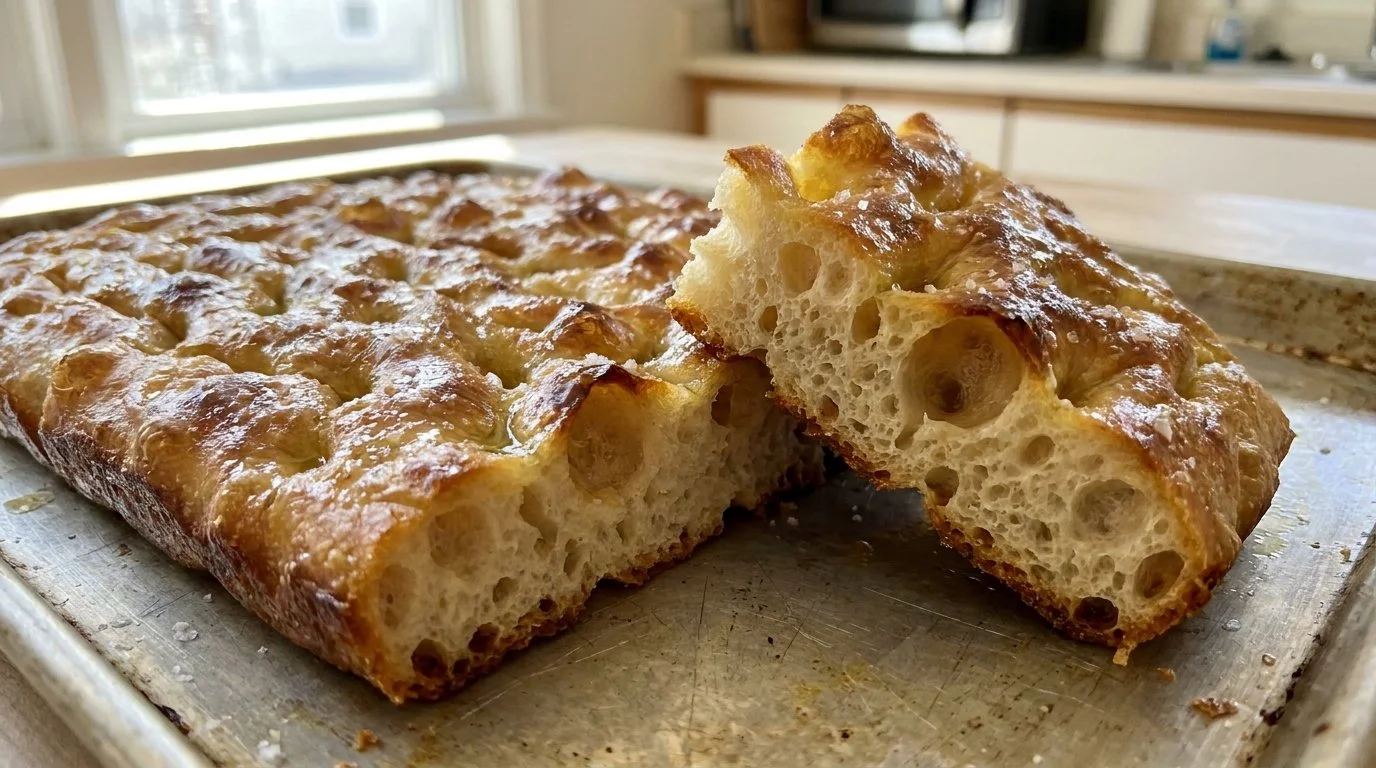
This no-knead focaccia recipe delivers a delightfully airy bread with crispy edges and big bubbles in the crumb, making it perfect for casual meals or as an impressive side. The slow fermentation either in the fridge or at room temperature develops flavor deeply without requiring extra effort to knead the dough. If you love rustic bread that’s easy to prepare and enjoy, this focaccia can become a staple in your kitchen. Its simple ingredients pair beautifully with garlic butter for a rich but not overwhelming finish. Keep in mind this bread is a treat best savored fresh or within a day or two to enjoy its optimal texture and flavor. For a complementary savory dish, consider pairing it with dishes like a crispy potato pie with spinach and mushrooms, which share rustic, comforting qualities.
Why This Recipe Is Helpful
- Requires no kneading, saving time and effort while still producing a light texture.
- Flexible fermentation times allow for overnight refrigeration or quicker rise at room temperature.
- Uses simple pantry staples already common in most kitchens.
Best For
This focaccia is ideal for home bakers who appreciate rustic bread but want to avoid complicated techniques. It’s great for casual dinners, sandwiches, or as an appetizer.
Be Careful If
Be cautious if you need low-sodium recipes, as kosher salt is a key ingredient. Also, this bread contains gluten and dairy (butter), so it may not suit those with related allergies or intolerances.
Ingredients
- 2 1/4 tsp active dry yeast
- 2 tsp honey
- 2 1/2 cups (600 ml) lukewarm water
- 5 cups (625 g) all-purpose flour
- 1 tbsp + 2 tsp Diamond Crystal kosher salt (or 1 tbsp Morton kosher salt)
- 1/4 cup (60 ml) + 2 tbsp (30 ml) extra-virgin olive oil, divided, plus more for hands
- 4 tbsp (55 g) unsalted butter, plus more for pan
- Flaky sea salt, for sprinkling
- 2–4 garlic cloves, peeled
Ingredient Notes
- Honey helps activate the yeast gently and adds slight sweetness to balance the savory bread.
- Use Diamond Crystal kosher salt for accurate seasoning measurement; substitute Morton but reduce slightly if needed.
- Extra-virgin olive oil lends flavor and crispness and also prevents sticking during shaping.
- Unsalted butter finishes the bread with a rich, savory garlic flavor when melted and brushed on.
Kitchen Tools Needed
- Large mixing bowl
- Whisk
- 13×9-inch (33×23 cm) baking pan
- Measuring cups and spoons
- Plastic wrap or a clean kitchen towel
- Oven mitts
- Spoon or pastry brush for garlic butter
Step-by-Step Instructions
- Activate yeast: In a large bowl, whisk together yeast, honey, and lukewarm water until combined. Let it rest for 5 minutes until it becomes foamy, signaling active yeast.
- Make dough: Add the flour and salt to the yeast mixture. Stir with a wooden spoon or dough whisk until a shaggy, sticky dough forms—no kneading required.
- Initial fermentation: Brush the dough’s surface with 2 tbsp (30 ml) olive oil to prevent drying. Cover tightly with plastic wrap and refrigerate 8 to 24 hours to develop flavor, or let it rise at room temperature for 3 to 4 hours until it rises noticeably.
- Prepare pan: Butter a 13×9-inch (33×23 cm) baking pan generously, then drizzle with 1 tbsp (15 ml) olive oil.
- Shape dough: Using oiled hands, gently fold and stretch the risen dough a few times in its bowl to redistribute air bubbles. Transfer it to the prepared pan and gently spread it out to cover the pan’s surface. Brush the dough top with more olive oil. Cover and let it rise until it doubles in size—between 1 1/2 and 4 hours depending on room temperature.
- Preheat oven: When ready, preheat your oven to 450°F (232°C).
- Dimple dough: Once risen, using oiled fingertips, press deep dimples all over the dough’s surface without deflating it. Drizzle the dough with additional olive oil. Sprinkle flaky sea salt evenly on top.
- Bake: Place the pan in the oven and bake for 20 to 30 minutes until the focaccia is puffed and golden brown with crispy edges.
- Prepare garlic butter: While baking, melt the unsalted butter in a small pan, add minced or crushed garlic, and cook gently for 1–2 minutes until fragrant but not browned.
- Finish: As soon as the focaccia comes out of the oven, brush the surface generously with the garlic butter. Slice and serve warm.
Pro Tips
- Use room temperature water to encourage optimal yeast activation without killing it.
- Don’t skip oiling your hands and work surface to avoid tearing the sticky dough.
- The longer refrigeration time helps deepen flavor and texture—overnight is ideal.
- Pressing deep dimples traps olive oil, creating crispy pockets essential for authentic focaccia.
Lighter Swaps
Since olive oil and butter are key to this recipe’s flavor and texture, it’s best to keep them as is. You can use light olive oil instead, but avoid skipping fats altogether. Those seeking a dairy-free version could try substituting the butter finish with more olive oil infused with garlic.
Common Mistakes
- Trying to knead the dough: low hydration and no-knead methods rely on gentle handling to maintain air bubbles.
- Using too much flour during mixing can create a dense bread—trust the recipe’s measurements.
- Ignoring the resting/fermentation times results in bland or tight crumb without large bubbles.
Serving Suggestions
Slice focaccia thickly and serve as a side with soups, salads, or charcuterie. It’s also excellent for sandwiches or simply dipped in olive oil and balsamic vinegar.
Storage Instructions
Keep any leftovers in an airtight container at room temperature for up to 2 days. For longer storage, freeze wrapped focaccia and reheat before serving.
Reheating Tips
Reheat slices in a toaster oven or conventional oven at 350°F (175°C) for 5–8 minutes to restore crispness. Avoid microwaving, which can make the bread soggy.
Nutrition Estimate
Per serving (based on 12 servings):
- Calories: 220 kcal
- Protein: 5 g
- Carbohydrates: 30 g
- Fat: 8 g
Values are estimates and may vary by ingredients and portion size.
Recipe Summary
- Prep Time: 15 minutes
- Cook Time: 20–30 minutes
- Total Time: 8 hours 45 minutes (including long rise)
- Servings: 12
- Cuisine: Italian
- Course: Bread / Side
- Calories: Approximately 220 kcal per serving
Frequently Asked Questions
Q: Can I make this focaccia without refrigeration?
A: Yes, you can let the dough rise at room temperature for 3 to 4 hours, but refrigeration enhances flavor and texture.
Q: What if I don’t have flaky sea salt?
A: Regular kosher salt can be used, but flaky salt gives a preferred crunchy texture and salt bursts on top.
Q: How important is the garlic butter finish?
A: It adds a delicious, savory richness but can be skipped or substituted with plain olive oil for a lighter option.
Conclusion
This no-knead focaccia combines ease and impressive flavor thanks to a simple, slow fermentation and a garlic butter finish. It’s perfect for home cooks seeking delicious bread with minimal effort, bringing crisp, airy delight to your table. For more recipes that blend ease and flavor, explore options like other no-knead breads that fit effortlessly into your cooking routine.