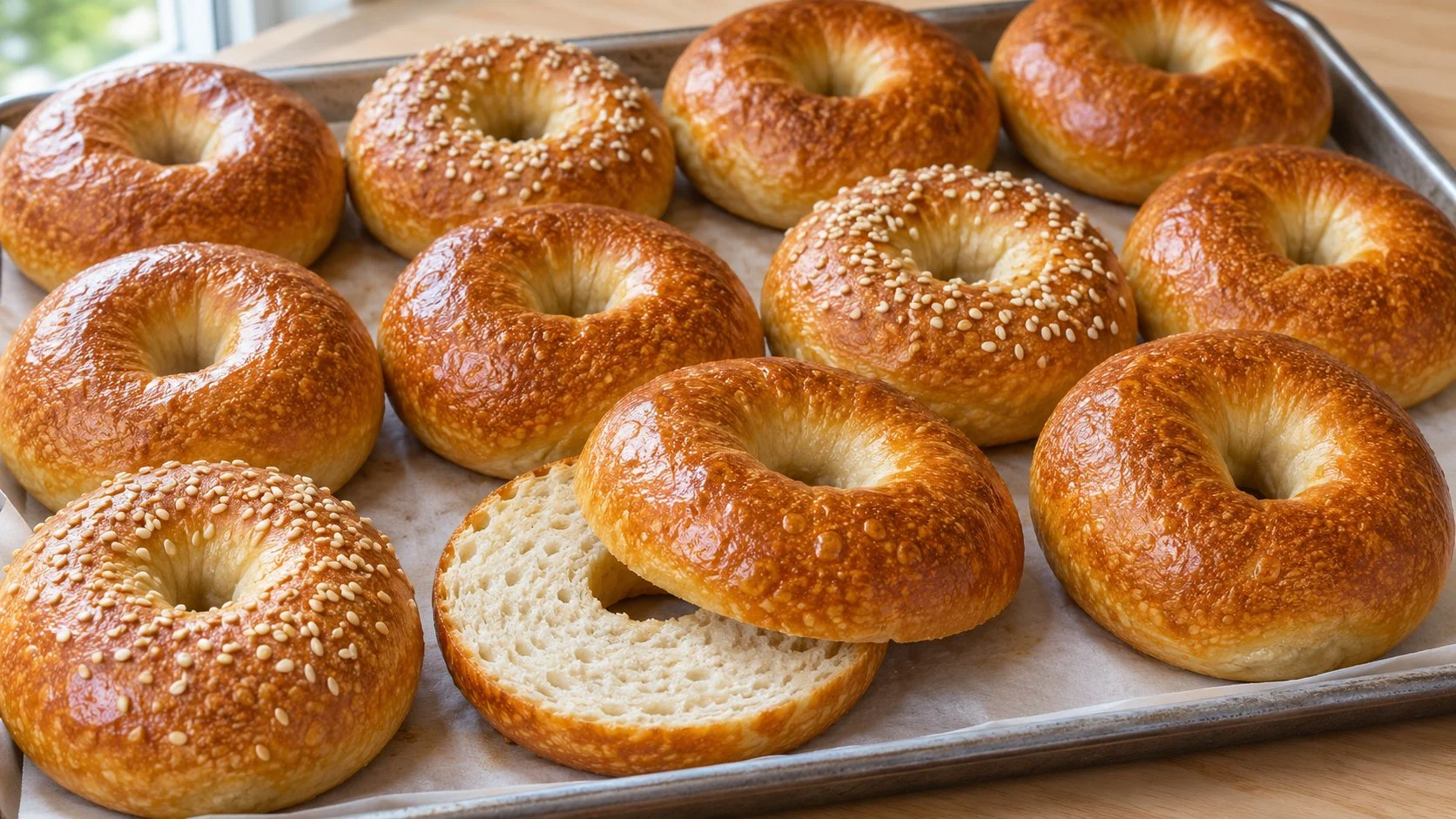
Overnight sourdough bagels are a fantastic way to enjoy homemade bread with a glossy, chewy crust and a depth of flavor only a natural ferment can provide. This recipe yields a dozen large, 4-inch bagels that develop their character through an overnight rise, making it ideal for a relaxed baking schedule. The result is a delightful balance between a crispy exterior and a tender, flavorful crumb that appeals to bread lovers and sourdough enthusiasts alike. These bagels are a versatile choice for breakfast or snacks and well-suited to those who appreciate naturally fermented baked goods. For a comparable artisan bread experience, consider exploring this crusty white bread recipe with an overnight Dutch oven method.
Why This Recipe Is Helpful
- Uses natural sourdough fermentation, eliminating commercial yeast.
- Requires minimal active time with an overnight proof for convenience.
- Produces bagels with a shiny, chewy crust and rich flavor complexity.
Best For
This recipe suits home bakers who enjoy the process of sourdough bread but want a classic bagel shape and texture. It’s perfect for those who want to prepare ahead and enjoy fresh bagels without early morning rush.
Be Careful If
If you are sensitive to gluten or have dietary restrictions related to wheat or high carbohydrate intake, this recipe might not be suitable as it contains bread flour and honey.
Ingredients
Dough:
- 840 g (7 cups) bread flour
- 425 g (1 3/4 cups plus 2 tbsp) lukewarm water
- 227 g (1 cup) ripe sourdough starter
- 63 g (3 tbsp) honey
- 18 g (1 tbsp) table salt
Boiling Water Bath:
- About 2 liters (2 quarts) water
- 21 g (1 tbsp) honey
- 3 g (1/2 tsp) table salt
Optional Topping:
- Up to 94 g (2/3 cup) everything bagel seasoning, sesame seeds, or poppy seeds
Ingredient Notes
- The sourdough starter must be fully ripe and active for proper fermentation and rise.
- Bread flour is ideal due to its higher protein content, which helps develop chewiness.
- Honey adds subtle sweetness to both dough and boiling water, enhancing crust color and flavor.
- Salt is essential to control fermentation and add taste balance.
- Optional toppings add traditional bagel flair but can be omitted or customized.
Kitchen Tools Needed
- Large mixing bowl
- Dough hook or hands for kneading
- Kitchen scale for accurate measurements
- Two baking sheets
- Parchment paper
- Large wide pan for boiling water bath
- Oven thermometer (optional but helpful)
Step-by-Step Instructions
- Combine bread flour, lukewarm water, active sourdough starter, honey, and salt in a large bowl. Mix until shaggy, about 1 minute. Knead using a dough hook for approximately 5 minutes or by hand for 10 minutes until the dough is smooth, elastic, and firm but not sticky.
- Cover the bowl with a cloth, leaving it ungreased, and ferment at around 21–24°C (70–75°F) overnight or up to 16 hours. The dough may puff up but not necessarily double.
- Turn the dough onto an unfloured surface and divide it into 12 equal pieces (about 130 g each). Shape each piece into a tight ball, allowing short rests as you work to relax the gluten.
- Prepare two baking sheets with parchment and lightly dust with flour. Using your finger, poke a hole through the center of each ball and gently stretch it to create a 2–2 1/2 inch hole. Arrange six bagels per sheet, cover loosely, and let rest for about 30 minutes until slightly puffy.
- Preheat your oven to 245°C (475°F), positioning racks in the upper and lower thirds. Bring the water, honey, and salt to a boil in a wide, deep pan (at least 1 1/4 inches deep). Boil 2-3 bagels at a time for 30 seconds on each side, then place back onto the baking sheets. Quickly sprinkle your chosen toppings onto the wet surface.
- Bake for 25–28 minutes, switching and rotating sheets halfway through for even browning. Your bagels are done when they develop a deep golden crust and reach an internal temperature near 99°C (210°F). Cool completely on a rack before slicing.
Pro Tips
- Ripe sourdough starter is key for a proper rise and flavor depth.
- Stretch the bagel holes generously; they will shrink slightly during baking.
- Boiling time is crucial—too short and bagels won’t form a crust, too long and they absorb too much water.
- Switch oven racks midway to ensure even cooking and color.
Lighter Swaps
- For a less sweet taste, reduce honey slightly but do not omit completely as it impacts crust color.
- Using whole wheat flour fully will change texture and flavor; a blend with bread flour is preferable if you want more fiber.
- Avoid heavy seeds or toppings if you want softer crusts.
Common Mistakes
- Not kneading enough can result in dense, less chewy bagels.
- Over-proofing can cause bagels to lose shape and texture.
- Skipping the boiling step leads to a very different, less authentic crust.
Serving Suggestions
Enjoy fresh with cream cheese, smoked salmon, or your favorite sandwich fillings for a classic treat.
Storage Instructions
Store bagels in an airtight container at room temperature for up to two days. For longer storage, freeze them tightly wrapped.
Reheating Tips
Reheat bagels in a toaster or oven at moderate heat until warm and slightly crispy for the best texture. Avoid microwaves to prevent sogginess.
Nutrition Estimate
Per bagel (approximate):
Calories: 250 kcal
Protein: 8 g
Carbohydrates: 50 g
Fat: 1 g
Values are estimates and may vary by ingredients and portion size.
Recipe Summary
Prep Time: 15 minutes (+ overnight rest)
Cook Time: 25-28 minutes
Total Time: About 12-16 hours including fermentation and baking
Servings: 12 large bagels
Cuisine: Artisan bread / Sourdough
Course: Breakfast / Snack
Calories: 250 kcal (per bagel)
Frequently Asked Questions
Can I use instant yeast instead of sourdough starter?
Yes, but the flavor and texture will be different. Sourdough gives a unique tang and chewy crumb. Use about 2 tsp yeast and adjust rising times.
How do I know when the bagels have boiled enough?
They should float and develop a slightly puffy surface after about 30 seconds on each side.
Can I add other toppings besides sesame or poppy seeds?
Absolutely! Everything bagel seasoning or even oats or sea salt work well. Just sprinkle immediately after boiling while the surface is wet.
Conclusion
This recipe offers a wonderfully authentic sourdough bagel experience with a manageable overnight rise, making homemade bagels accessible to avid bread bakers. Their shiny, chewy crust and rich taste elevate any breakfast or snack. Homemade sourdough bagels can easily become a cherished baking ritual.