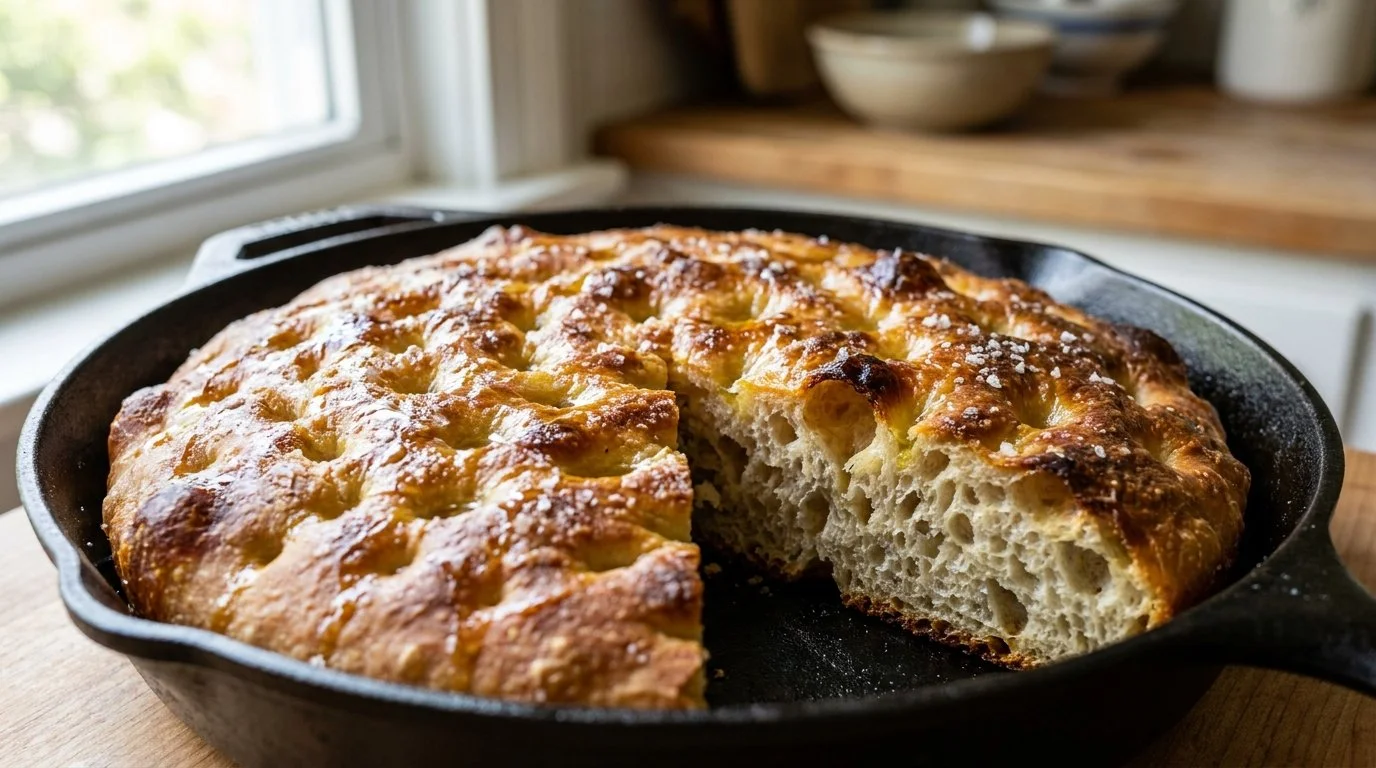
This overnight no-knead focaccia is a simple yet impressive bread with a delightfully crisp olive oil crust. It’s perfect for casual meals, providing a light, airy crumb and a golden, flavorful crust that’s achieved without intensive kneading or complex techniques. Bread lovers who appreciate rustic, hands-off baking will find this recipe practical and satisfying. The use of extra-virgin olive oil gives it a rich taste and adds healthy fats, making it a nice option for those mindful of balanced eating. For easy homemade breads with minimal effort, this focaccia joins other favorites like no-knead crusty bread in a Dutch oven.
Why This Recipe Is Helpful
- Requires no kneading, saving time and effort.
- Develops flavor through a long, cold fermentation.
- Creates a crispy olive oil crust that adds texture and taste.
Best For
This recipe suits home bakers seeking an easy way to enjoy fresh, artisan-style focaccia without fuss. It’s great for sharing at family meals, casual gatherings, or as an accompaniment to soups and salads.
Be Careful If
People sensitive to gluten should avoid this recipe as it uses bread or all-purpose flour. Also, take note of the olive oil, which adds fat content that may not suit very low-fat diets.
Ingredients
- 4 cups (500 g) bread flour or all-purpose flour
- 1 ¾ teaspoons (10 g) kosher salt
- 1 ¼ teaspoons (4 g) instant dry yeast
- 1 ⅔ cups (400 g) room-temperature water
- ¼ cup plus 2 tablespoons (68 g) extra-virgin olive oil, divided
- Coarse sea salt, for topping
Ingredient Notes
- Bread flour gives better structure, but all-purpose flour works well too.
- Instant dry yeast ensures quick and reliable fermentation.
- Coarse sea salt creates a crunchy, flavorful topping that contrasts nicely with the soft interior.
Kitchen Tools Needed
- Large mixing bowl
- Measuring cups and spoons or scale
- Cast-iron skillet or ovenproof pan
- Plastic wrap or clean kitchen towel
- Oven capable of reaching 500°F (260°C)
Step-by-Step Instructions
- In a large bowl, whisk together the flour, kosher salt, and instant yeast. Add the water and stir with a wooden spoon or spatula until there’s no visible dry flour. Mix in about 2 tablespoons (20 g) of olive oil until combined. Cover the bowl and let it rest at room temperature for 1 hour.
- Perform six folds: using wet hands, fold the dough over itself around the bowl’s edge six times. Let it rest for 15 minutes, then repeat the folding once more. Cover the dough tightly and refrigerate for at least 18 hours, up to 3 days.
- Remove the dough from the fridge and let it stand at room temperature for 10 minutes. Gently shape it into a loose ball without deflating too much. Coat a cast-iron skillet with 2 tablespoons (28 g) olive oil, then place the dough inside. Cover and proof for 1 ½ to 2 hours until very puffy and nearly doubled.
- Preheat your oven to 500°F (260°C). Using your fingertips, dimple the dough deeply in several places to create pockets. Drizzle the remaining olive oil over the surface and sprinkle generously with coarse sea salt.
- Bake for 25–30 minutes until the crust is deeply golden and crisp. Let it cool briefly in the pan, then transfer to a rack before slicing.
Pro Tips
- Folding instead of kneading develops gluten and strengthens dough gently.
- Retarding the dough in the fridge enhances flavor and fermentation complexity.
- Dimples prevent the focaccia from puffing up too much and hold olive oil and salt for texture.
- Use a preheated cast-iron skillet for optimal crust development.
Lighter Swaps
The olive oil crust is key to focaccia’s flavor, so lighter swaps may affect texture. For a slightly lighter version, you can reduce olive oil by 10%, but the crust won’t be as crispy. Otherwise, the original proportions work best.
Common Mistakes
- Skipping the long cold fermentation can reduce flavor and crumb texture.
- Over-handling or too aggressive shaping can deflate the dough and make it dense.
- Under-proofing before baking leads to a tight crumb instead of light pockets.
Serving Suggestions
Serve warm or at room temperature with antipasti, soups, or salads. It’s excellent sliced for dipping in olive oil or topped with fresh herbs.
Storage Instructions
Store focaccia in an airtight container or wrapped in foil at room temperature for up to 2 days. For longer storage, freeze after baking, then thaw and reheat as needed.
Reheating Tips
Warm slices in a 350°F (175°C) oven for about 5–7 minutes to restore crispness. Avoid microwaving, which can make the crust chewy.
Nutrition Estimate
- Calories: 280 per serving (1/8th of the focaccia)
- Protein: 6 g
- Carbohydrates: 38 g
- Fat: 11 g
Values are estimates and may vary by ingredients and portion size.
Recipe Summary
- Prep Time: 30 minutes active, plus 1 hour initial rest + 18 hours cold fermentation
- Cook Time: 25–30 minutes
- Total Time: About 20 hours (mostly inactive time)
- Servings: 8
- Cuisine: Italian
- Course: Bread
- Calories: Approximately 280 per serving
Frequently Asked Questions
Can I use regular table salt instead of kosher salt?
Yes, but reduce the amount slightly as table salt is finer and saltier by volume.
What happens if I don’t refrigerate the dough?
Skipping refrigeration speeds fermentation but reduces flavor depth and dough development.
Is this recipe suitable for beginners?
Absolutely. The no-knead method is beginner-friendly and forgiving, especially with the long rest times.
Conclusion
This no-knead focaccia offers the perfect combination of ease and deliciousness, making artisan-style bread accessible to any home cook. Its crisp olive oil crust and tender crumb are ideal for everyday meals or entertaining. Pairing it with simple dishes or enjoying it on its own elevates any table effortlessly.
For more no-knead bread ideas that require minimal effort, you might enjoy recipes like easy no-knead crust rolls using only four ingredients.