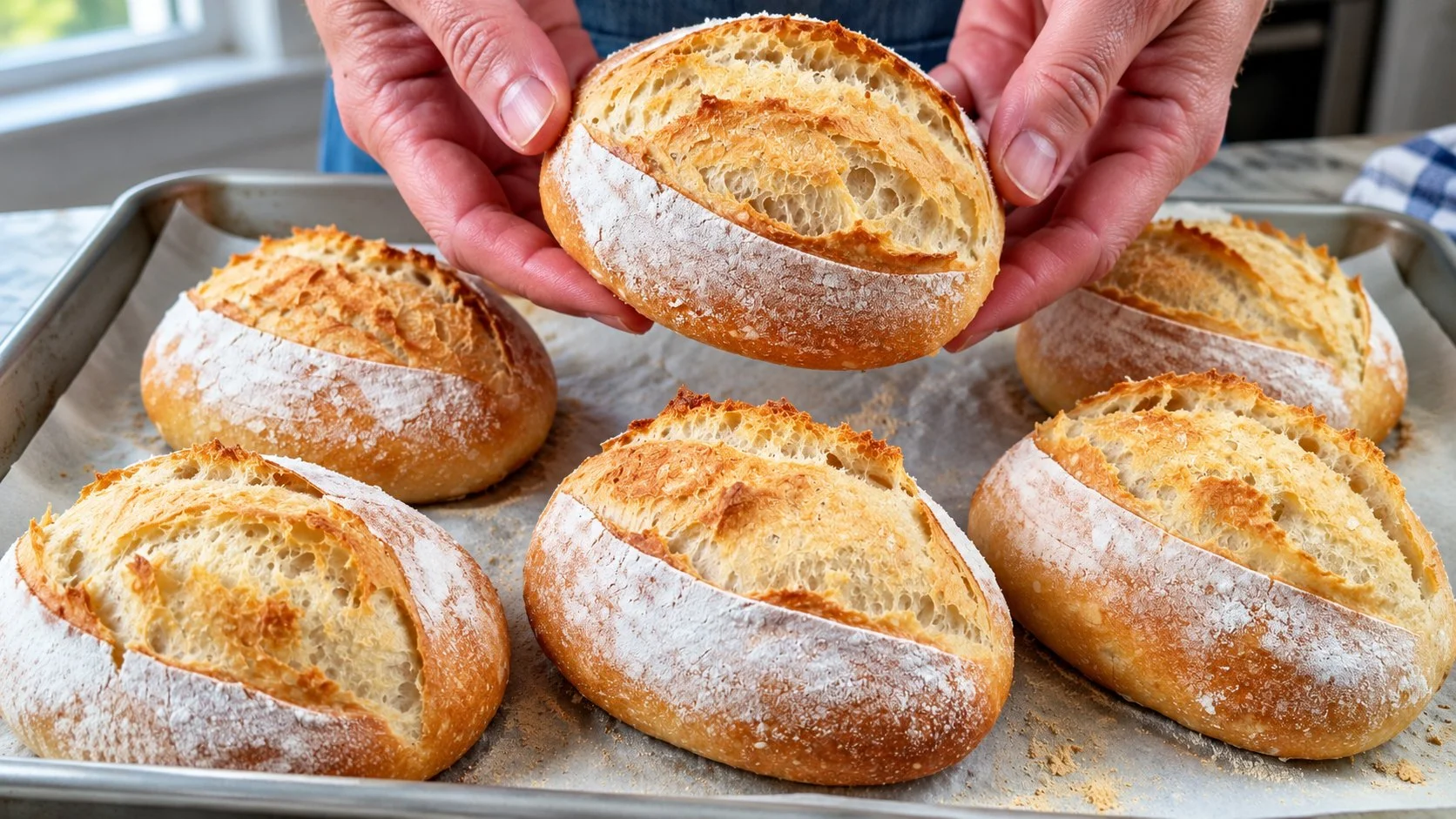
This quick bread recipe offers a simple and rewarding way to bake fresh bread at home without complicated techniques or long proofing times. It uses minimal ingredients—water, yeast, bread flour, and salt—and relies on a straightforward folding method to develop the dough’s texture. Perfect for home cooks who want fresh bread with a crispy crust and soft interior, it’s also versatile enough to pair with many meals. This bread provides a satisfying carbohydrate source but should be enjoyed in moderation within a balanced diet. For a quick variation on bread baking, you may find this new way to bake bread useful.
Why This Recipe Is Helpful
- Requires only four basic ingredients easily found in most kitchens.
- Uses a simple “lift and slap” folding technique to develop gluten without machines.
- Yields a fresh, crusty loaf ideal for daily meals with minimal preparation time.
Best For
This recipe suits beginners and busy home cooks looking to bake homemade bread without complex steps. It’s also great for those wanting a wholesome, comforting loaf to serve alongside various dishes.
Be Careful If
People with gluten intolerance or wheat allergies should avoid this recipe as it relies on bread flour. Also, yeast can sometimes cause minor digestive discomfort for sensitive individuals.
Ingredients
- 1 cup (220 ml) water, lukewarm
- ¾ teaspoon (3 g) fresh yeast, or ½ teaspoon (2 g) dry yeast
- 2 ½ cups (320 g) bread flour
- 1 teaspoon (6 g) salt, adjust to taste
Ingredient Notes
- Fresh yeast gives a subtle, fresh flavor but dry yeast is a convenient alternative that works well.
- Bread flour ensures good gluten formation for a chewy and airy crumb. All-purpose flour may produce a denser loaf.
- Salt is essential not just for taste but also for yeast control and dough strength.
Kitchen Tools Needed
- Large mixing bowl
- Tea strainer or fine sieve (for dusting flour)
- Sharp blade or bread lame for scoring
- Two baking trays of the same size (one to cover the other)
- Measuring cups and spoons
Step-by-Step Instructions
- In a large bowl, combine lukewarm water, yeast (fresh or dry), bread flour, and salt. Adjust salt to your taste. Mix thoroughly until no dry flour remains.
- Cover the dough and let it rest for 30 minutes. This relaxes the gluten and hydrates the flour.
- With a wet hand, stretch each of the four sides of the dough and fold them toward the center. Repeat the “lift and slap” motion several times to build strength.
- Let the dough rise in a warm spot until it has doubled in size, about 2 hours.
- Dust your work surface with flour and fold the dough a couple of times to make handling easier.
- Divide the dough into 6 equal parts. Dust off excess flour, flatten each part slightly, fold tightly into a ball, and seal by rubbing on the surface.
- Leave the balls uncovered to rest for 10 minutes. Then fold each ball again to tighten the surface and roll each into a longer shape.
- Place the shaped dough on a baking pan and let rise for 30 minutes. Lightly dust the tops with flour using a tea strainer.
- Score each loaf with a sharp blade. Sprinkle a little water on and cover with a second tray of the same size to create steam.
- Bake in a preheated oven at 430°F (220°C) for 20 minutes. Remove the top tray and bake for another 10 minutes until the crust cracks and turns golden brown.
- Serve warm with butter or your preferred accompaniment.
Pro Tips
- Using a wet hand helps prevent the dough from sticking while folding.
- Creating steam by covering the dough during baking gives a crisp crust.
- Letting the dough rest uncovered before final shaping improves the crust texture.
- Preheating the oven thoroughly is crucial for good oven spring and crust development.
Lighter Swaps
This bread is naturally light and simple, so alterations like whole grain flours may make it heavier and affect rising. For a lighter crust, you could reduce the salt slightly but not more than 25%.
Common Mistakes
- Adding too much flour during kneading can make the bread dense.
- Not letting the dough rise long enough results in a tight crumb and less flavor.
- Skipping scoring can cause irregular cracking in the crust.
Serving Suggestions
Enjoy this bread fresh as a side for soups, salads, or main dishes. It pairs wonderfully with butter, cheese, or jam for breakfast or snacks.
Storage Instructions
Store leftover bread wrapped in a clean kitchen towel or paper bag at room temperature for 1–2 days for best texture. Avoid plastic bags which soften the crust.
Reheating Tips
To refresh the crust, reheat slices briefly in a preheated oven at 350°F (175°C) for 5–7 minutes. Avoid microwaving if possible, as softening will occur.
Nutrition Estimate
Calories: Approximately 140 per serving (one small roll)
Protein: 4 g
Carbohydrates: 28 g
Fat: 0.5 g
Values are estimates and may vary by ingredients and portion size.
Recipe Summary
- Prep Time: 15 minutes
- Cook Time: 30 minutes
- Total Time: Approximately 3 hours (including rising)
- Servings: 6 small rolls
- Cuisine: International
- Course: Side dish / Bread
- Calories: ~140 per serving
Frequently Asked Questions
Q: Can I use all-purpose flour instead of bread flour?
A: Yes, but expect a denser bread with a less chewy texture.
Q: How do I know if the bread is fully baked?
A: The crust should be golden and crackled, and the bread will sound hollow when tapped underneath.
Q: Can this bread be frozen?
A: Yes, let cool completely before freezing. Thaw at room temperature and refresh in the oven as described.
Baking your own bread at home can be deeply satisfying and truly fresh. This recipe strikes a nice balance between simplicity and a classic crunchy crust with a tender inside. For more inspiration with homemade dishes, you might appreciate this best eggplant recipe that is crispy outside and tender inside. Give it a try and enjoy the wholesome goodness right from your kitchen!