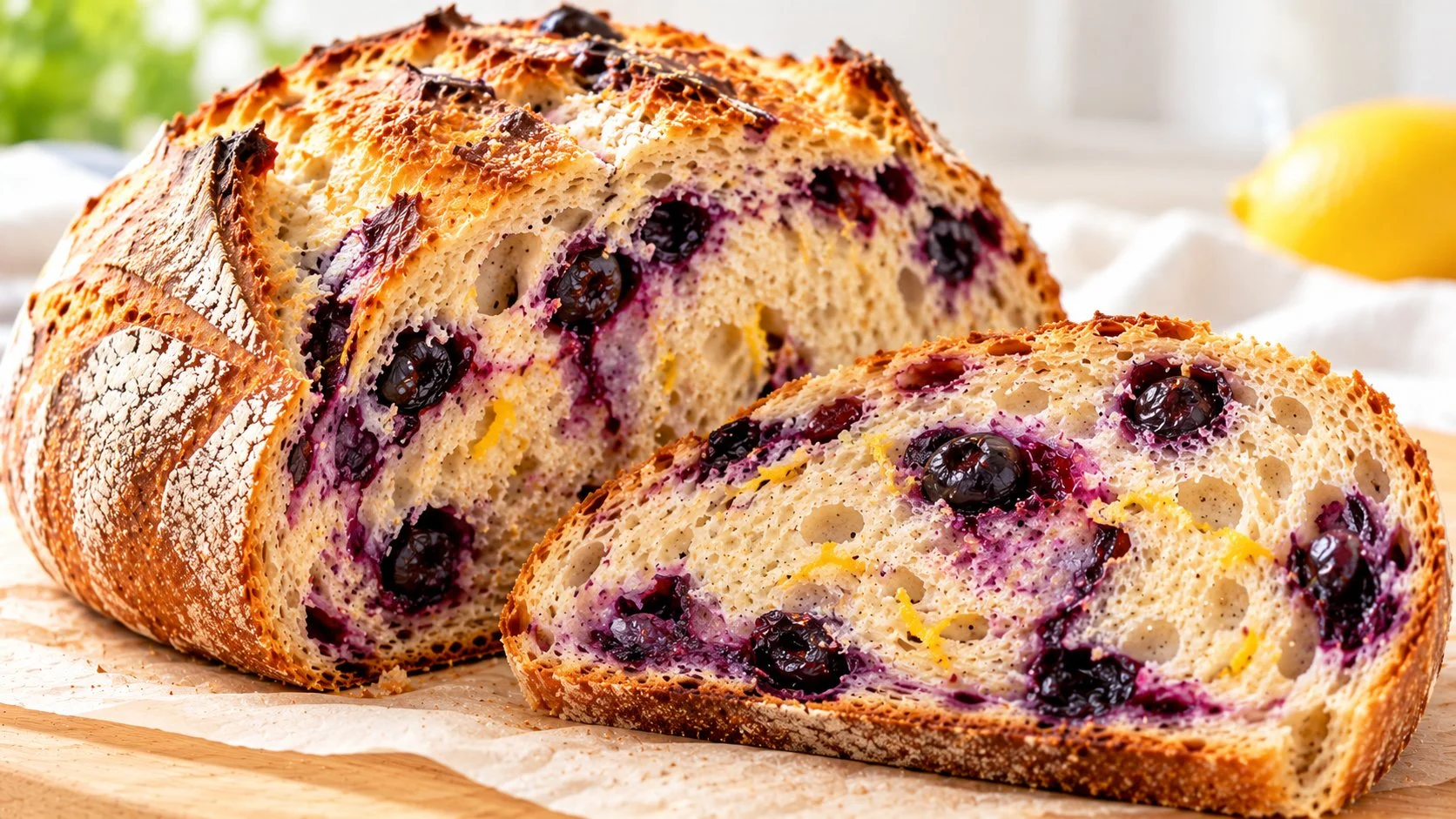
Lemon blueberry sourdough bread is a delightful twist on traditional sourdough, combining tangy citrus zest with bursts of fresh blueberries for a subtly sweet and refreshing loaf. This artisanal bread is perfect for those who enjoy baking at home and appreciate a complex flavor profile in their bread. It offers a balance between the natural tang of sourdough and the bright freshness of lemon and berries, making it a lovely choice for breakfast or a light snack. Due to its ingredients, this bread provides some fruit fiber and antioxidants but contains sugar and gluten, so it suits most but not all dietary needs. For enthusiasts of homemade bread, this recipe offers a rewarding baking experience that pairs well with both sweet and savory toppings, like those you might find in a recipe such as avocado and egg breakfast bread.
Why This Recipe Is Helpful
- Combines natural sourdough fermentation with fresh fruit for enhanced flavor.
- Includes detailed folding and lamination techniques for improved dough strength.
- Offers step-by-step guidance for bulk and final fermentation suitable for home baking.
Best For
Bread lovers who enjoy artisan-style baking and those looking to experiment with fruity sourdough variations will find this recipe rewarding and delicious.
Be Careful If
This recipe contains gluten and sugar, so it is not suitable for those with celiac disease or strict low-sugar diets.
Ingredients
- 3 1/4 cups (400 g) strong white bread flour (minimum 12.5% protein)
- 1 teaspoon salt
- 1 tablespoon caster sugar
- 1 cup (240 ml) water
- 2/3 cup (160 g) active sourdough starter (100% hydration)
- 1 cup (150 g) fresh blueberries
- Zest of 2 lemons
Ingredient Notes
- Use a strong bread flour to ensure good gluten development and structure.
- Fresh blueberries provide moisture and sweetness; avoid frozen as they may release excess water.
- Lemon zest adds brightness but use finely grated zest to avoid bitterness.
- The sourdough starter should be well-fed and active for a good rise.
Kitchen Tools Needed
- Stand mixer with dough hook (optional but helpful)
- Large mixing bowls
- Damp kitchen towels or plastic wrap
- Banneton or proofing basket, dusted with rice flour
- Bench scraper
- Dutch oven or heavy lidded pot
- Bread lame or razor blade
- Parchment paper
Step-by-Step Instructions
- Early morning, feed your sourdough starter and keep it in a warm spot (21-27°C) loosely covered for about 4 hours until doubled.
- Before the starter peaks, combine flour and water in a stand mixer bowl. Mix with dough hook for 1-2 minutes, then cover with a damp towel and let autolyse for 30-60 minutes.
- Sprinkle salt and sugar over the hydrated dough, add the active starter, and mix on medium speed for 10-15 minutes until smooth and elastic.
- Transfer dough to a large bowl, cover, and rest for 30 minutes in a warm place.
- With wet, cold hands, perform coil folds: lift the dough’s sides and tuck underneath, turning the bowl a quarter turn after each coil. Repeat every 30 minutes three more times; after the final fold, dough should feel elastic and strengthened.
- Wet your work surface generously. Turn the dough onto the wet surface and gently stretch it without tearing.
- Sprinkle one-third of the blueberries and lemon zest evenly over the dough center, fold one side over the mix-ins, scatter another third on the folded area, and fold the other side over.
- Continue folding the dough like a pamphlet, layering remaining mix-ins in thirds over the folded dough until it forms a laminated parcel.
- Return dough to the bowl, cover, and ferment for 1-3 hours at 21-27°C until it noticeably rises (bulk fermentation is faster due to sugar).
- At the end of bulk fermentation, scrape dough onto a lightly floured surface smooth side down. Fold four corners into the center and flip the dough over.
- Use a bench scraper at a shallow angle to push and tuck dough under itself, forming a tight, round ball that holds shape without spreading.
- Place the dough seam side up in a well-floured banneton. Pinch the seam if dough spreads, dust with flour, and cover with a lightweight towel and plastic bag.
- Refrigerate for the final rise, 12-36 hours.
- Preheat oven with Dutch oven inside to 240°C.
- Remove dough from fridge and bag, place carefully onto parchment paper smooth side down. Dust with flour.
- Score dough deeply (about 1 cm) at a 30-45° angle with lame to encourage a clean "ear" during baking.
- Transfer dough with parchment to the hot Dutch oven carefully; cover with lid.
- Bake covered for 30 minutes. Remove lid, reduce heat to 200°C, and bake for another 20 minutes until crust is golden brown.
- Remove bread from Dutch oven and place on wire rack; remove parchment.
- Cool completely before slicing.
Pro Tips
- Ensure your starter is bubbly and active for proper rise.
- Wetting hands before folding prevents dough sticking.
- Lamination with blueberries and lemon zest creates beautiful pockets but handle gently to avoid tearing.
- Score dough just before baking for the best oven spring.
Lighter Swaps
Because of the bread’s particular texture and structure, lighter ingredient substitutions might affect flavor and rise. Sticking to the original recipe yields the best results.
Common Mistakes
- Not allowing enough fermentation time can yield dense bread.
- Folding the dough too roughly can tear it, losing structure.
- Scoring too shallow leads to poor oven spring.
Serving Suggestions
Enjoy this bread toasted with butter, cream cheese, or alongside a mild cheese board for breakfast or brunch.
Storage Instructions
Store wrapped in a clean kitchen towel or paper bag at room temperature up to 3 days. For longer storage, slice and freeze.
Reheating Tips
Reheat slices briefly in a toaster or oven at low temperature to refresh the crust without drying the interior.
Nutrition Estimate
- Calories: approximately 220 per serving (1/12th loaf)
- Protein: 6 g
- Carbohydrates: 40 g
- Fat: 1 g
Values are estimates and may vary by ingredients and portion size.
Recipe Summary
- Preparation Time: 10 minutes (plus fermentation)
- Cooking Time: 50 minutes
- Total Time: Approximately 18-40 hours (including long fermentation)
- Servings: 12 slices
- Cuisine: Artisan bread, sourdough
- Course: Bread, breakfast or snack
- Calories: 220 per serving
Frequently Asked Questions
How ripe should the blueberries be?
Use fresh, firm blueberries to avoid excess moisture that can affect the dough texture.
Can I use frozen blueberries?
Frozen berries are not recommended as they release water that can make the dough soggy.
Is it necessary to refrigerate the dough overnight?
Yes, the cold final rise improves flavor and texture, giving better control over fermentation.
The bright combination of lemon and blueberry in this sourdough loaf adds a fresh, aromatic note to traditional bread. It’s a wonderful baking project for anyone seeking a vibrant and flavorful artisan bread. For a different bread experience with rich buttery elements, you might also appreciate a simple and tasty garlic butter cheese bread recipe alongside. Enjoy baking, and savor every bite!