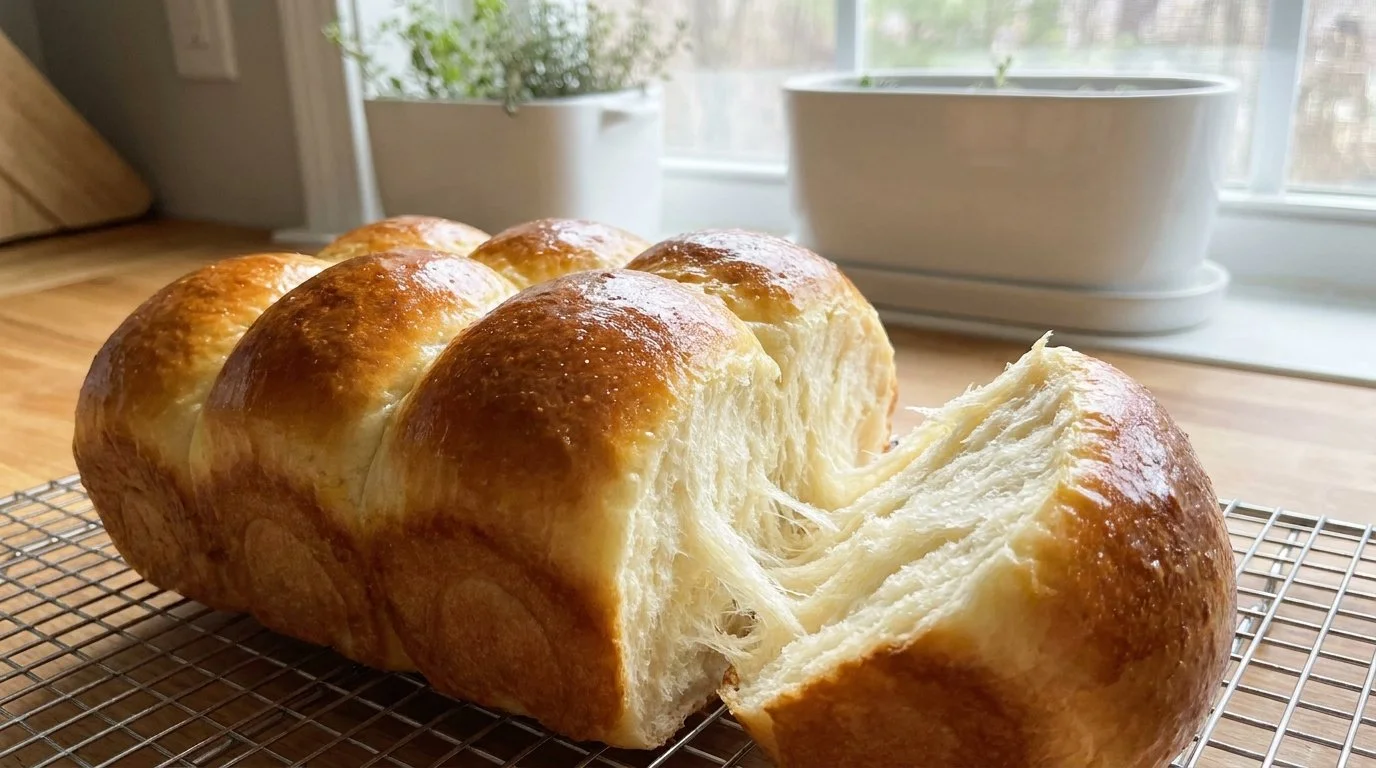
Japanese milk bread, known for its irresistibly soft, fluffy texture, is a delightful treat that melts in your mouth. The secret lies in the tangzhong method—a cooked flour paste that enhances moisture and softness, making this bread perfect for sandwiches or just enjoying with butter. This recipe is particularly suited for home bakers who appreciate a tender crumb and a slightly sweet flavor. It’s comforting without being heavy, and while it contains dairy and butter, it offers a lovely balance that suits everyday meals or special breakfasts. If you like experimenting with airy breads, you might also appreciate how this technique enriches other recipes like legume-based loaves.
Why This Recipe Is Helpful
- The tangzhong starter improves moisture retention, keeping the bread soft for days.
- It produces a lightly sweet, fluffy loaf that works well for various sandwiches and snacks.
- Uses everyday ingredients typically found in most kitchens, making it accessible for beginners.
Best For
This bread is ideal for families wanting soft, homemade sandwich bread or anyone craving silky, pillowy white bread that’s not too dense.
Be Careful If
People with dairy allergies or sensitivities will need to modify this recipe, as it includes milk, butter, and nonfat dry milk.
Ingredients
-
Tangzhong:
- 3 tablespoons (43 g) water
- 3 tablespoons (43 g) whole milk
- 2 tablespoons (14 g) bread flour
-
Dough:
- 2 1/2 cups (300 g) bread flour
- 2 tablespoons (14 g) nonfat dry milk
- 1/4 cup (50 g) granulated sugar
- 1 teaspoon (6 g) table salt
- 1 tablespoon instant yeast
- 1/2 cup (113 g) whole milk
- 1 large egg
- 4 tablespoons (57 g) unsalted butter, melted
Ingredient Notes
- Bread flour is essential for gluten development and structure; all-purpose flour will yield a less chewy crumb.
- Nonfat dry milk adds tenderness and helps the crust brown without affecting dough hydration significantly.
- Instant yeast can be substituted with active dry yeast, but you will need to proof it first.
Kitchen Tools Needed
- Saucepan for tangzhong preparation
- Stand mixer with a dough hook (optional but recommended)
- 9×5-inch (23×13 cm) loaf pan
- Pastry brush for milk wash
- Kitchen scale or measuring cups and spoons
Step-by-Step Instructions
- Prepare the tangzhong by whisking water, milk, and bread flour in a small saucepan over low heat. Stir continuously for 3–5 minutes until it thickens to a smooth paste. Remove from heat and cool to lukewarm.
- In a large mixing bowl or stand mixer, combine the 2 1/2 cups bread flour, nonfat dry milk, sugar, salt, and instant yeast.
- Add the lukewarm tangzhong, whole milk, egg, and melted butter to the dry ingredients. Knead by hand or with a mixer on medium speed for about 15 minutes until the dough is smooth, elastic, and slightly sticky but holds its shape.
- Transfer the dough to a lightly greased bowl, cover it with a damp cloth or plastic wrap, and let it rise in a warm place for 1 to 1 1/2 hours until doubled and puffy.
- Punch down the dough gently, then divide it into four equal pieces. Flatten each piece, fold like a letter, flatten again and roll each into a short log.
- Place the four logs seam-side down, side by side, in the greased loaf pan. Cover and let rise another 40–50 minutes until the dough looks very puffed.
- Preheat your oven to 350°F (177°C). Brush the top of the dough gently with milk for a light sheen.
- Bake for 30–35 minutes until the top is golden brown and the internal temperature reaches at least 190°F (88°C).
- Remove the bread from the oven and cool completely on a wire rack before slicing.
Pro Tips
- Keep the tangzhong consistency smooth and lump-free by whisking constantly during cooking.
- Avoid adding too much flour during kneading; the dough should be slightly sticky but manageable.
- For even rising, ensure your kitchen temperature is warm but not hot—around 75°F (24°C) is ideal.
- Brushing with milk instead of egg wash keeps the crust soft and lightly shiny.
Lighter Swaps
Lighter substitutions could negatively affect the richness and softness. However, you might try substituting some whole milk with low-fat milk, though the texture will be slightly less tender.
Common Mistakes
- Skipping the tangzhong step will yield a denser loaf less soft over time.
- Overbaking can dry out the bread; watch for color and internal temperature.
- Insufficient kneading results in poor gluten development and a crumbly texture.
Serving Suggestions
Enjoy this bread fresh with butter, jam, or as the base for sandwiches, especially with lightly sweet fillings like red bean paste or honey.
Storage Instructions
Store bread in an airtight container or wrapped tightly in plastic wrap at room temperature; it stays fresh for up to 3 days. For longer storage, freeze sliced portions wrapped in foil or plastic.
Reheating Tips
Rewarm slices briefly in a toaster or wrapped in foil in a 300°F (150°C) oven for about 10 minutes to restore softness.
Nutrition Estimate
- Calories: approx. 180 per slice
- Protein: 5 g
- Carbohydrates: 30 g
- Fat: 4 g
Values are estimates and may vary by ingredients and portion size.
Recipe Summary
- Prep Time: 20 minutes
- Cook Time: 35 minutes
- Total Time: 2 hours 45 minutes (including rising)
- Servings: 8 slices
- Cuisine: Japanese-inspired bread
- Course: Bread / Snack
- Calories: approx. 180 per slice
Frequently Asked Questions
Q: Can I use all-purpose flour instead of bread flour?
A: You can, but the bread will be less chewy and may have a softer crumb. Bread flour helps develop the right texture.
Q: How long can I keep this bread fresh?
A: Stored properly at room temperature, it’s best eaten within 3 days but can be frozen for longer storage.
Q: Is this bread suitable for vegan diets?
A: No, this recipe contains milk, butter, and egg, making it unsuitable for vegans.
Conclusion
This Japanese milk bread offers a wonderfully soft, tender texture that’s inviting for any meal. Using the tangzhong method elevates a simple loaf to something special, perfect for both beginners and experienced bakers looking for reliably fluffy bread. Its balanced sweetness and delicate crumb make it a versatile addition to your baking repertoire, encouraging you to explore more soft bread recipes like the pumpkin milk bread with its light, airy crumb.