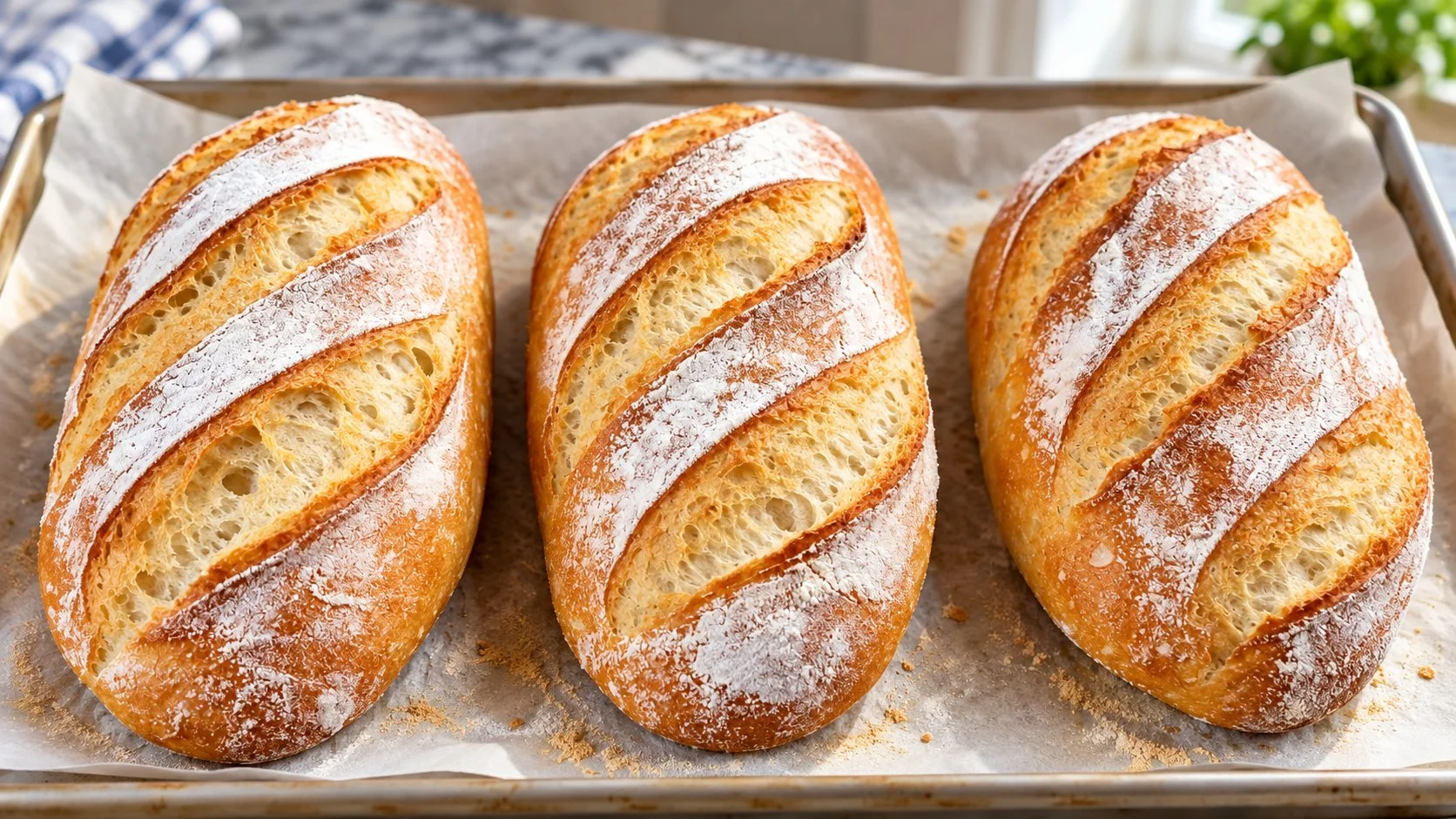
French bread is a wonderfully simple yet satisfying recipe to make at home. With just four basic ingredients, this bread delivers a crispy crust and soft, airy interior that rivals store-bought versions. Its no-knead technique means it’s accessible even if you don’t have much baking experience or time. This recipe is great for anyone who wants to enjoy fresh, homemade bread without hassle—perfect for sandwiches, toast, or alongside meals. Because it uses minimal ingredients without added fats or sugars, it fits well into balanced eating routines, offering a straightforward source of carbohydrates.
Why This Recipe Is Helpful
- Uses only 4 simple ingredients commonly found in most kitchens.
- Requires no complex kneading, making it easy for beginners.
- Produces a crusty loaf with a soft inside using home techniques.
Best For
This recipe suits home bakers who want fresh bread with minimal fuss and wholesome ingredients. It’s also ideal for families needing versatile bread for everyday meals.
Be Careful If
If you have gluten intolerance or celiac disease, this bread contains wheat and is not suitable. Also, people watching sodium intake should note the salt content.
Ingredients
- 1 cup (220 ml) water
- ½ teaspoon (2 g) dry yeast or ¾ teaspoon (3 g) fresh yeast
- 2 ½ cups (320 g) bread flour
- 1 teaspoon (6 g) salt
Ingredient Notes
- Bread flour is preferred for its higher protein content, which helps develop good gluten structure and chewiness.
- Dry yeast and fresh yeast can be used interchangeably; dry yeast is more convenient for home use.
- Salt not only flavors the bread but controls yeast activity, enhancing texture.
Kitchen Tools Needed
- Large mixing bowl
- Baking tray
- Sharp blade or razor for scoring
- Kitchen towel
- Measuring cups and spoons
Step-by-Step Instructions
- In a large mixing bowl, combine water, yeast, bread flour, and salt. Stir until there’s no visible dry flour; no kneading is needed at this stage.
- Cover the bowl and let the dough rest 30 minutes to hydrate.
- With wet hands, perform the ‘lift and slap’ technique: stretch each of the four sides of the dough and fold to the center repeatedly for about 15 seconds. This helps gluten development without kneading.
- Repeat this stretching and folding once more to improve elasticity.
- Cover and let the dough rise in a warm place until doubled in size, about 2 hours.
- Lightly flour your work surface; divide the dough into 3 equal portions.
- Shape each piece into a ball and let rest for 10 minutes.
- Roll each ball into a longer baguette-like shape; place on a baking tray.
- Cover with a clean towel and let rise for 30 minutes.
- Dust the dough lightly with flour, smooth the surface with your hand, and score lengthwise with a sharp blade. Sprinkle a little water on the dough for steam during baking.
- Cover the dough with a second tray of the same size to trap steam; bake at 430°F (220°C) for 20 minutes.
- Remove the top tray and bake for an additional 10 minutes or until the crust turns golden brown.
- Cool the bread thoroughly before slicing to allow the crumb to set.
- Enjoy your homemade French bread plain, with butter, or as a base for sandwiches, toast, or soup accompaniments.
Pro Tips
- Wetting your hands before stretching prevents the dough from sticking.
- A covered baking tray traps steam, essential for a crispy crust.
- Scoring controls expansion in the oven and creates the classic look.
- Allow the bread to cool completely for best texture; hot bread can seem gummy inside.
You might also enjoy pairing your fresh bread with other recipes like this classic French yogurt cake, which offers a sweet complement for your homemade bread table.
Lighter Swaps
The simplicity of this recipe means substitutions can affect texture. Using whole wheat flour will add fiber but produce a denser loaf. For softer crumb, slightly reduce salt or yeast, but results vary. This original version offers the best balance of flavor and texture.
Common Mistakes
- Not fully hydrating the flour can create dry spots inside the loaf.
- Rushing the rising time leads to dense bread; patience is key.
- Skipping steam during baking results in a less crispy crust.
Serving Suggestions
Serve fresh French bread sliced with butter, alongside hearty soups, salads, or use for sandwiches. Its balanced flavor complements both savory and sweet toppings.
Storage Instructions
Store bread wrapped in a linen towel or bread bag at room temperature for up to 2 days. For longer storage, freeze sliced portions in airtight bags.
Reheating Tips
Warm slices in a toaster or oven for a few minutes to refresh the crust and soften the crumb. Avoid microwaving as it can make bread rubbery.
Nutrition Estimate (per serving, approximate)
- Calories: 130
- Protein: 4 g
- Carbohydrates: 26 g
- Fat: 0.3 g
Values are estimates and may vary by ingredients and portion size.
Recipe Summary
- Prep Time: 15 minutes
- Cook Time: 30 minutes
- Total Time: 3 hours (including rising)
- Servings: 6
- Cuisine: French
- Course: Bread
- Calories: 130 per serving
Frequently Asked Questions
Q: Can I make this bread without yeast?
A: Yeast is essential here for rise and texture; no-yeast substitutes would require a different recipe approach.
Q: Is the dough very sticky? How do I handle it?
A: Yes, initially it’s sticky but stretching and folding with wet hands helps manage it without extra flour.
Q: Can I freeze the dough before baking?
A: Yes, you can freeze the shaped dough after the first rise. Thaw and let it rise again before baking.
Conclusion
Making your own French bread at home is truly rewarding and surprisingly easy with this straightforward recipe. The minimal ingredients and gentle handling produce a beautiful crust and tender inside that will impress family and friends. Give it a try for fresh bread anytime, skipping store-bought loaves effortlessly.
If you’re exploring more recipes, you might also like this easy crispy potato pie with spinach and mushrooms for a savory treat.