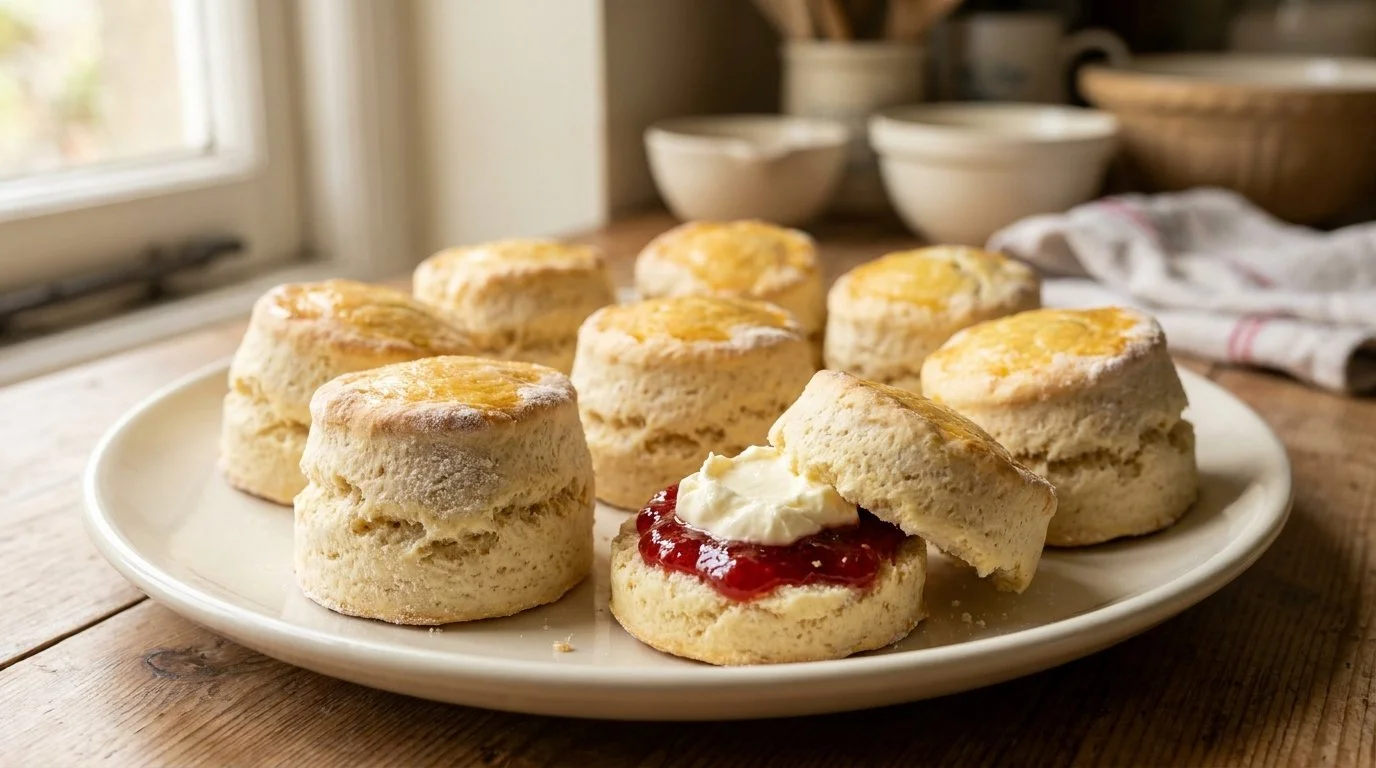
Classic British scones are a beloved treat, perfect for afternoon tea or a cozy snack. These airy, golden delights are simple to make and offer a delightful balance of sweet and buttery flavors. Ideal for anyone who appreciates classic baking, they’re especially lovely served with traditional jam and clotted cream. While these scones are a treat rich in butter and sugar, enjoying them occasionally as part of a balanced diet makes for a truly comforting experience. For a touch of sweetness inspired by other comforting baked goods, try pairing your scones with flavors reminiscent of soft apple cream cake.
Why This Recipe Is Helpful
- Uses basic pantry ingredients and requires minimal preparation time.
- Results in fluffy, tender scones with a golden crust.
- Perfect for beginners wanting an authentic British baking experience.
Best For
This recipe suits anyone wanting an easy homemade teatime treat or a special breakfast option with friends or family.
Be Careful If
These scones contain dairy and gluten, so they’re not suitable for those with allergies or intolerances to these ingredients.
Ingredients
- 350 g (3 cups) self-raising flour, plus extra for dusting
- 1 tsp baking powder
- 1/4 tsp salt
- 85 g (6 tbsp) unsalted butter, cubed and chilled
- 3 tbsp caster sugar
- 175 ml (3/4 cup) milk, warmed
- 1 tsp vanilla extract
- A squeeze of fresh lemon juice
- 1 beaten egg, for glazing
- Jam and clotted cream, to serve
Ingredient Notes
- Self-raising flour provides the rise and light texture needed for scones; do not substitute directly with plain flour unless adding extra baking powder.
- Using cold butter helps create the classic crumbly texture by keeping the butter solid until baking.
- A splash of lemon juice brightens the flavor subtly but can be omitted if needed.
Kitchen Tools Needed
- Mixing bowl
- Pastry cutter or fingertips for rubbing butter
- Measuring cups and spoons
- 5 cm (2 inch) round cutter
- Baking tray and parchment paper
- Pastry brush
Step-by-Step Instructions
- Preheat the oven to 220°C/200°C fan (425°F) and place a baking tray inside to heat.
- In a large bowl, sift together the self-raising flour, baking powder, and salt.
- Rub the cold butter into the flour mixture using your fingertips or a pastry cutter until it resembles fine breadcrumbs.
- Stir in the caster sugar evenly.
- Warm the milk gently (not boiling), then add the vanilla extract and a squeeze of lemon juice.
- Make a well in the dry ingredients, pour in the milk mixture, and combine quickly using a butter knife or spatula. Avoid over-mixing to keep scones tender.
- Turn the dough onto a lightly floured surface and fold it 2 to 3 times; pat down gently to form a 4 cm (about 1½ inch) thick round.
- Use a 5 cm cutter to stamp out 8 scones. Place them on the preheated baking tray.
- Brush the tops with the beaten egg for a glossy finish.
- Bake for about 10 minutes until they have risen well and are golden brown. Remove from the oven promptly.
- Let the scones cool briefly before serving with generous amounts of jam and clotted cream.
Pro Tips
- Handle the dough gently and keep it cool to prevent tough scones.
- Use a sharp cutter pressed straight down without twisting to help scones rise evenly.
- Serve scones warm for the best texture and flavor.
- If the mixture feels too sticky, lightly flour your hands instead of adding too much extra flour.
Lighter Swaps
- Substitute half the butter with unsweetened applesauce to reduce fat but expect a softer crumb.
- Use low-fat milk or plant milk alternatives if you want to lighten dairy content.
- Reduce sugar slightly if you prefer less sweetness, but do not omit entirely as it affects browning.
Common Mistakes
- Overworking the dough leads to tough, chewy scones instead of light and fluffy.
- Not preheating the baking tray results in scones that don’t rise properly.
- Twisting the cutter when cutting scones seals the edges and inhibits rising.
Serving Suggestions
Serve warm with traditional strawberry jam and clotted cream for an authentic experience. They also pair beautifully with a fresh pot of tea or coffee.
Storage Instructions
Keep leftover scones in an airtight container at room temperature for up to 2 days. For longer storage, freeze them wrapped tightly and defrost before reheating.
Reheating Tips
Reheat scones in a preheated oven at 180°C (350°F) for 5–7 minutes to restore warmth and crispness without drying them out.
Nutrition Estimate
- Calories: approx. 230 kcal per scone
- Protein: 4 g
- Carbs: 30 g
- Fat: 8 g
Values are estimates and may vary by ingredients and portion size.
Recipe Summary
- Prep Time: 15 minutes
- Cook Time: 10 minutes
- Total Time: 25 minutes
- Servings: 8 scones
- Cuisine: British
- Course: Snack / Tea-time
- Calories: 230 kcal per scone
Frequently Asked Questions
Can I make these scones dairy-free?
Yes, using plant-based butter and milk alternatives works well, though the texture may differ slightly.
Can I prepare the dough ahead and bake later?
You can refrigerate the dough wrapped for up to 24 hours, then shape and bake fresh.
What is the difference between self-raising and plain flour?
Self-raising flour has baking powder mixed in to help baked goods rise, while plain flour does not.
For more comforting baked treats, you might enjoy the delightful texture and flavors of classic Downeast Maine pumpkin bread, which offers a lovely seasonal alternative.
To Finish
These classic British scones are a straightforward, rewarding bake that impresses with little effort. Their tender crumb and golden finish make for the perfect pairing with jam and clotted cream—an enduring symbol of British comforting food. Give this recipe a try to enjoy a little slice of tradition in your home kitchen.